
Designed
for every stage of discovery
Full design control
in a single Platform
Define what your aptamer must do – the platform designs it to match. Prioritize what is critical, relax the rest. Generative modeling drives the molecule to your specifications.
Reinforce your aptamer, add functions, enable detection. Select the bases, backbone, and end labels – the system finds structures optimized for your chemistry and binding site.
Specify the operating environment – the platform designs the aptamer accordingly. Temperature, pH, ionic composition under your control, with reliable folding in your working buffer.
Research & Publications
Behind the Platform
Learn more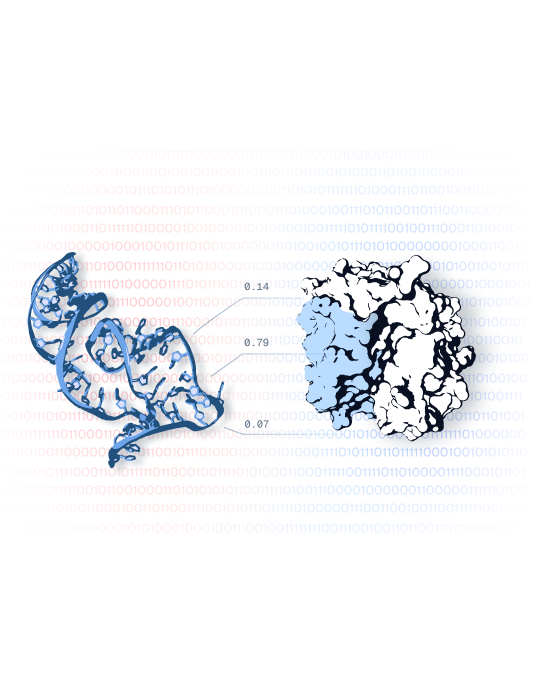

2026 - Research paper
Aptamer Design: From SELEX to AI-Driven Rational Design
A technical overview of modern affinity reagent design – aptamers, chemical antibodies, and computational molecular binders.
Aptamers / Design / SELEX / Binder / Xelari
2026 - Peer-reviewed
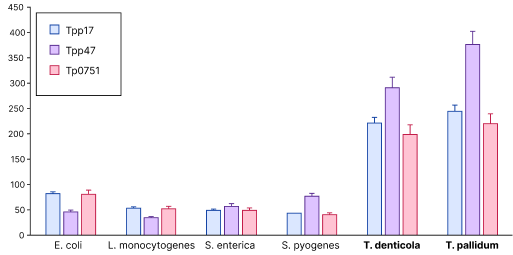
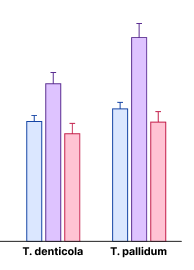
Evaluation of Artificial Intelligence-Generated DNA Aptamers Against Treponema pallidum Surface Proteins
Aptamers / AI / Treponema pallidum / Xelari
Pricing
Flexible for any scale
Starter
$500 / Month
2 Runs
3 Candidates per Run
24h Turnaround
Parallel computation
Team
$8,500 / Month
30 Runs
6 Candidates per Run
24h Turnaround
Parallel computation
Lab
$25,000 / Month
90 Runs
10 Candidates per Run
12h Turnaround
Parallel computation
Enterprise
$75,000+
Unlimited* Runs
All Candidates per Run
Real-Time Turnaround
Parallel computation
Built through joint programs, not a self-serve tier.
1 Unlimited Runs subject to fair use within compute capacity defined in the MSA.
2 Real-time means delivery as soon as computation completes, typically 1–6 hours depending on target. The 24h on other tiers is standard scheduling, not raw compute time.
3 Additional KD validation per Run – number of secondary in-silico binding validations performed on top-ranked candidates beyond the primary scoring.
4 Annual subscriptions are prepaid for 12 months, non-refundable, unused Runs do not roll over.
FAQ
Frequently asked questions
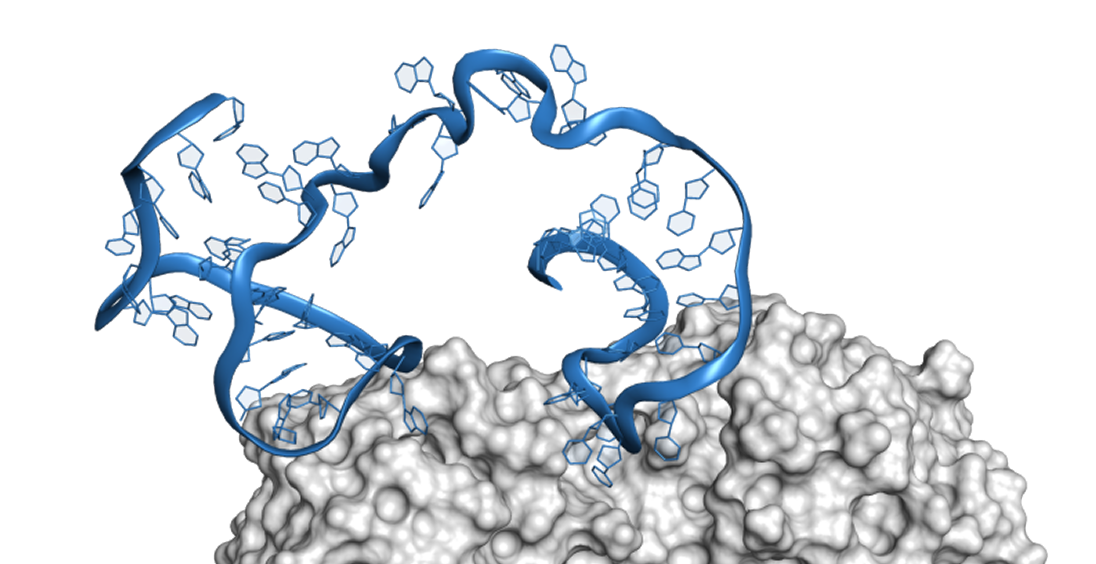
Xelari is a structure-based platform for de novo aptamer design. You provide an experimental or computationally predicted structure of a target protein and the platform generates DNA or RNA aptamer candidates.
Each candidate includes a sequence, predicted fold, proposed binding mode and annotations linked to the project requirements.
SELEX experimentally selects binders from an oligonucleotide library and requires a physical target presented in a relevant form and conformation during selection. Xelari starts from a three-dimensional structure and designs candidates computationally.
Structure-based design is useful when a defined epitope must be addressed or the target is difficult to express, purify, or maintain. The approaches can also be combined: computational candidates may be tested directly or used as starting points for experimental optimization.
Strong candidates generally have an experimental structure or a predicted model with good local confidence at the intended binding site. The site should provide a sufficiently broad, solvent-exposed surface and remain accessible in the relevant biological state. Neutral or positively charged surface environments are generally more favorable than strongly acidic patches.
The standard workflow currently focuses on protein targets. Disordered regions without a stable structure, low-confidence models at the intended site, deep narrow pockets, very small or highly polar epitopes, small molecules, glycans and lipids are outside or lower priority for the current workflow.
In most research and diagnostic work, an aptamer does the same job as an antibody: it binds a chosen target with high specificity. An aptamer can usually be designed to fill the antibody’s role.
What changes is the molecule itself. An aptamer is a chemically synthesized nucleic acid, not a protein raised in cells or animals. The sequence is the product and that has consequences a protein binder can’t match.
Every batch is the same molecule, so there is no lot-to-lot drift. Synthesis is standard oligonucleotide chemistry – no cell lines, no immunization, no animals. Labels, conjugation chemistries and other functional handles go on at defined positions during synthesis rather than in a separate coupling step. The finished molecule tolerates a wide range of pH and temperature and ships at room temperature. Design takes a day, against a binding site you specify.
Aptamers earn their place where you need to iterate fast, pin down a precise binding site, work in a small footprint or reach a target that is hard to raise an antibody against.
1. Project setup. Define the target protein and the desired aptamer functions in natural language.
2. Automated structural analysis. The platform parses the request, prepares the target structure, and identifies candidate binding regions.
3. Design. Multi-stage pipeline generates and scores aptamer candidates against binding, specificity, stability, and environmental constraints.
4. Delivery. Final designs are returned with sequence, predicted folded structure, binding mode, and functional annotations.
The platform accepts both experimental structures (X-ray, cryo-EM, NMR) and computationally predicted models (AlphaFold-class), in PDB or mmCIF format.
Experimental structures are generally preferred, but a predicted model works well when the proposed binding region has good local confidence and represents the relevant biological state. A deposited experimental structure is not required.
If only one domain or fragment is well-resolved, scope the design to that high-confidence region and leave the rest of the protein out of the binding site definition. This is the recommended approach for partially predicted targets.
Yes. You can define a surface region – fragment or anchor residue to build the interaction around. The requested region is checked for accessibility and suitability for a folded aptamer.
If no site is specified, the platform identifies and ranks candidate surface regions rather than assuming a single predetermined epitope.
Yes. Project inputs can include nucleic-acid type, preferred length, supported base or backbone modifications, functional handles, pH, temperature, ion concentrations and specificity requirements. Available chemistries are confirmed during project setup.
An affinity objective can be used for design and ranking. Predicted properties guide candidate selection, while final performance is determined experimentally in the intended system.
Yes. You define the intended function through the project setup by selecting the relevant target state, binding site or epitope, aptamer format, chemical modifications and operating conditions.
The platform designs candidates against the specified structural and functional requirements. The resulting biological effect including: inhibition, activation or cellular internalization – must be confirmed experimentally in the relevant assay system.
Xelari designs against the structural state you supply for the project, so it depends on the feature.
In the structure file: the conformation is whichever structure you upload. Cofactors, ions and bound ligands need to be in the coordinates when they hold that conformation or shape the target surface.
In the setup fields: post-translational modifications go in by residue – the amino acid carrying the modification goes in the Modified residue field. Glycosylation, phosphorylation, ubiquitination, acetylation, methylation, hydroxylation, and so on.
Accessibility: design against a part of the target that is actually exposed in its biological context, not one buried by a membrane, a binding partner, or oligomerization. When in doubt, crop the structure to that region – for a membrane receptor, the extracellular face, for example. Which region that is comes down to your target’s biology, so work it out before setup.
A standard computational run takes up to 24 hours, depending on target size, structural complexity and project constraints. It includes structure preparation, binding-site analysis, candidate generation and scoring.
A standard run returns the top 10 ranked candidates. Each digital design package includes the sequence in FASTA format, predicted secondary structure in dot-bracket notation, a PDB model of the target-aptamer complex and a TSV map of predicted residue-nucleotide contacts.
Ranking prioritize designs within a project and is based on predicted affinity. Rankings and predicted properties are computational estimates rather than experimentally measured affinity, specificity or function.
The number of candidates selected for synthesis depends on the project objective, assay capacity and budget. Candidates should be evaluated as a ranked panel rather than treated as confirmed binders, so testing several designs provides more information than relying on the top-ranked one alone.
The standard platform output is a digital, synthesis-ready design package. Synthesis and laboratory validation are not included in a computational run.
The delivered sequence can be ordered from a commercial oligonucleotide manufacturer. No Xelari-specific reagent is required.
On assay selection, the format should match the intended use and the physical form of the target. Purified-protein projects may use kinetic or equilibrium binding methods, while cell-surface targets may require cell-based measurements. Appropriate negative, matrix and counter-target controls should be included where relevant.
The user selects and validates the folding conditions, buffer composition, controls and assay format for the intended experimental system, particularly when chemical modifications or complex biological samples are involved.
If you would like help choosing an assay format or planning initial testing for your design, write to info@xelari.com and we will go through it with you.
Pricing depends on the engagement model: self–service access, offered by subscription or per project or a custom development program for specialized targets and formats.
Self–service pricing is listed in the Pricing section. For a project–specific estimate, write to info@xelari.com with the target and objectives.
Under the standard platform terms, the primary intellectual-property rights to delivered molecular designs belong to the client. Xelari retains the underlying platform, algorithms, methods and processes. Bespoke programs may run under a separate contract with different rights provisions.
Standard designs are delivered for research use. Diagnostic or therapeutic use requires suitable characterization, optimization, manufacturing controls, safety assessment and the appropriate regulatory approvals.
Clients comply with any attribution or disclosure requirements relating to Xelari in scientific publications and commercial applications, as set out in the applicable Terms of Service or project agreement.
Xelari complies with applicable data–protection law, including GDPR and CCPA, and applies technical and organizational measures to protect your data. Under the Terms of Service the primary IP rights to your designs remain yours and you can request deletion of your personal data where there is no overriding reason to keep it.
Xelari keeps a limited right to use anonymized and aggregated data to improve the Platform and only in a way that does not reveal your identity, your research objectives, or commercially sensitive information.
Hosting region, retention periods, deletion and any additional security requirements are set in the applicable agreement, so confirm the project–specific data terms before work begins. Full details are in the Privacy Policy and Terms of Service.
