Latest NewsSeptember 22, 2026
Why pH, temperature and ions belong in the design specification
The same aptamer sequence works reliably in one laboratory and produces a weak signal in another. Has something gone wrong with the DNA? Perhaps. But first ask whether the two laboratories have given the molecule the same chemical environment.
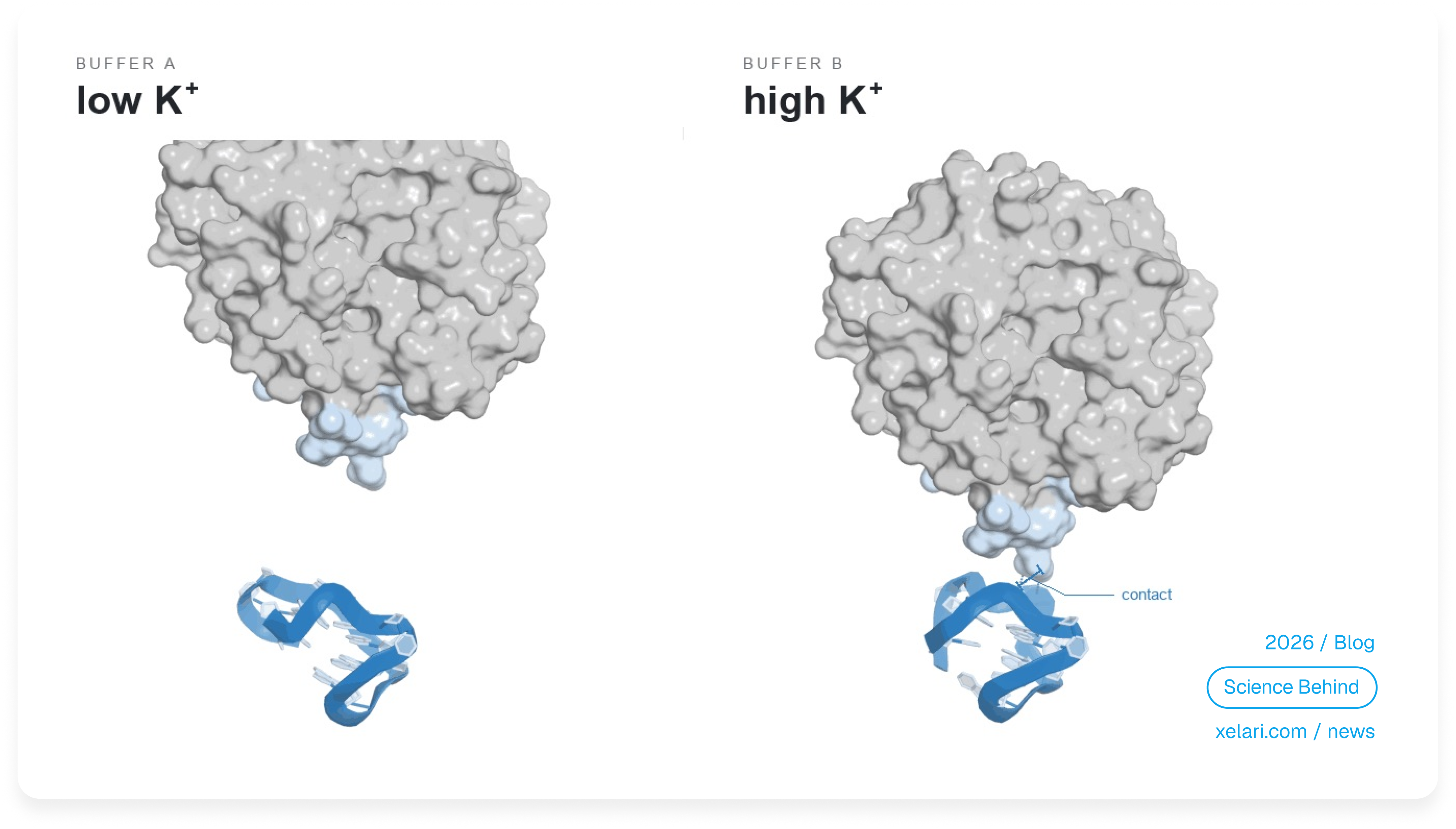
An aptamer is a short strand of DNA or RNA that recognizes a molecular target through its three-dimensional arrangement and chemical contacts. Unlike a rigid manufactured component, it can change shape. Experiments that track individual aptamers show that ions can alter the balance between those shapes without changing a single nucleotide – the building block of the strand.
Sequence defines the possibilities. The environment helps determine which states are populated, which contacts are favorable and whether productive binding can occur. Operating conditions therefore belong in the design specification.
An aptamer is a short strand of DNA or RNA that recognizes a molecular target through its three-dimensional arrangement and chemical contacts. Unlike a rigid manufactured component, it can change shape. Experiments that track individual aptamers show that ions can alter the balance between those shapes without changing a single nucleotide – the building block of the strand.
Sequence defines the possibilities. The environment helps determine which states are populated, which contacts are favorable and whether productive binding can occur. Operating conditions therefore belong in the design specification.
Science Behind|Blog post|20 mins read
Continue Reading