
Why Protein Structure Is Becoming Design-Ready Now

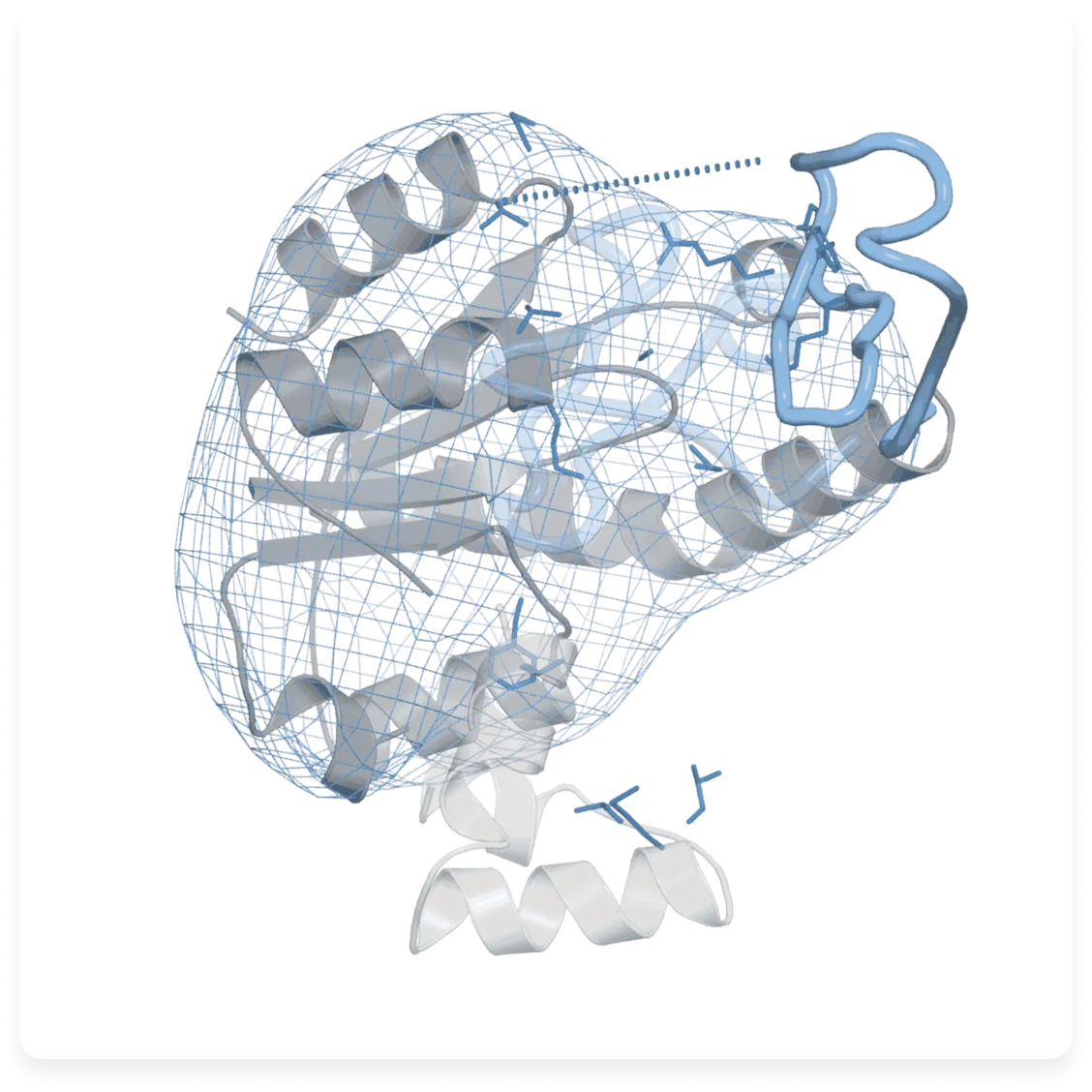
The developments converging in 2025–2026 are changing the role of structural input in molecular design. A target model can increasingly be explored, tested and updated as evidence accumulates.
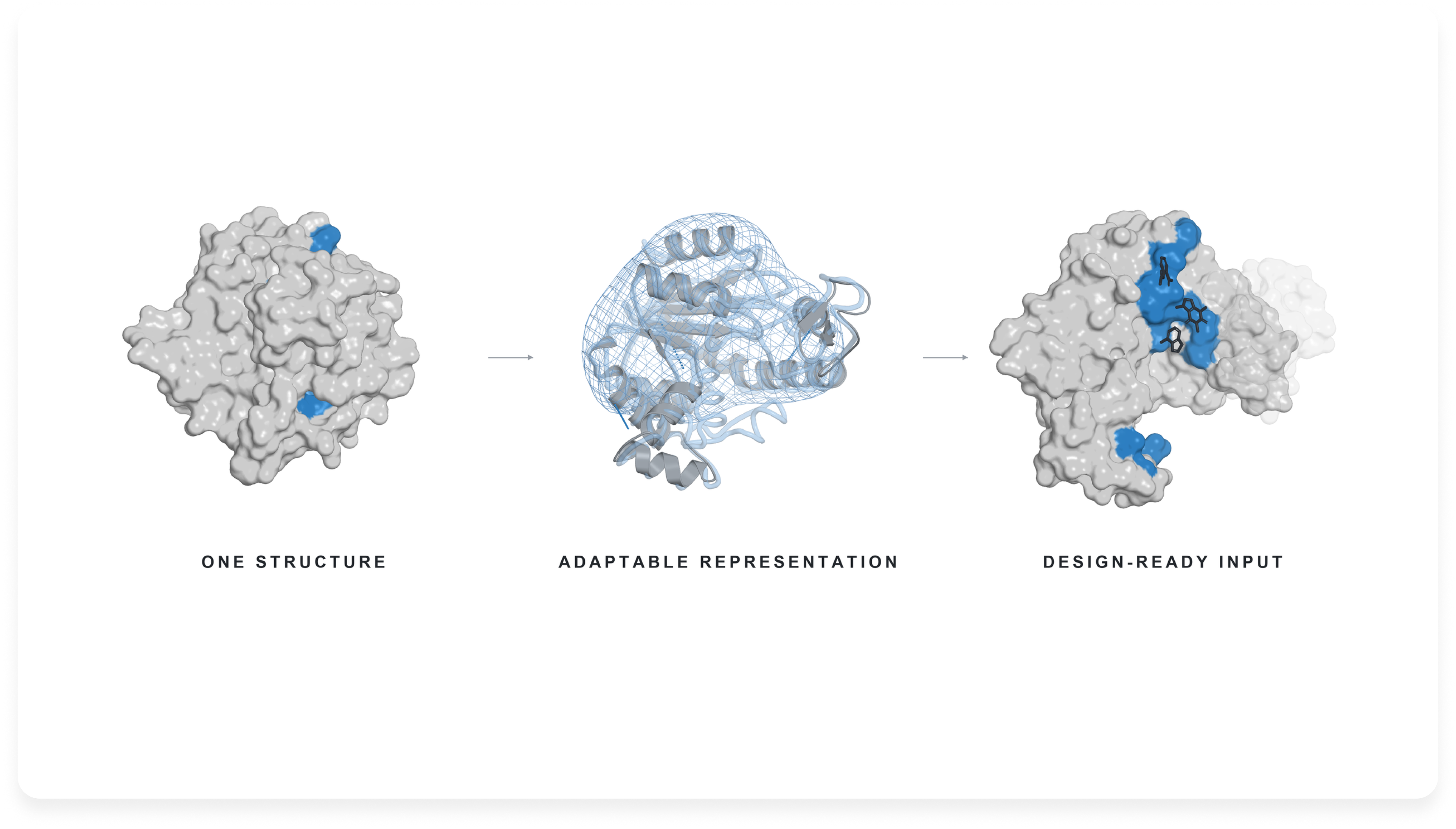
AlphaFold made a useful protein structure a realistic starting point for many projects that previously lacked one. A sequence could yield a detailed model of a target’s fold, giving researchers access to surfaces, pockets and possible interactions. That achievement changed what molecular design could attempt. It also brought a more specific question into focus: which features of the model are supported well enough to determine which molecule to make? Jumper et al., 2021
Predicted models have already passed that test in particular applications. Prospective screens against the σ2 and serotonin 5-HT2A receptors found that unrefined AlphaFold2 structures supported hit rates and affinities comparable to those obtained with experimental structures, despite differences in their binding sites. Lyu et al., 2024 For those targets, the predictions were sufficiently useful to discover molecules. Design readiness was demonstrated through the task, without requiring the predicted and experimental coordinates to agree everywhere.
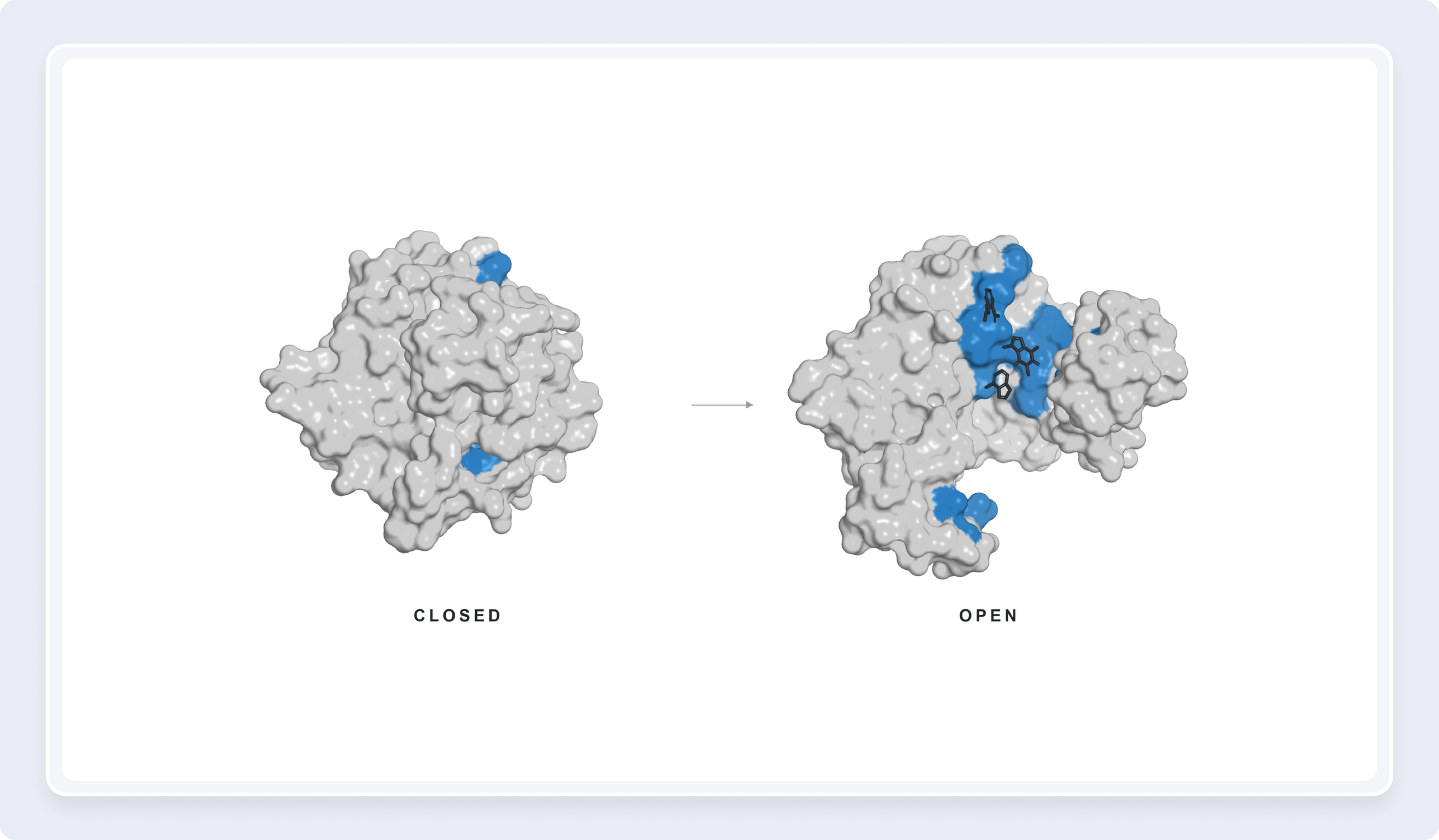
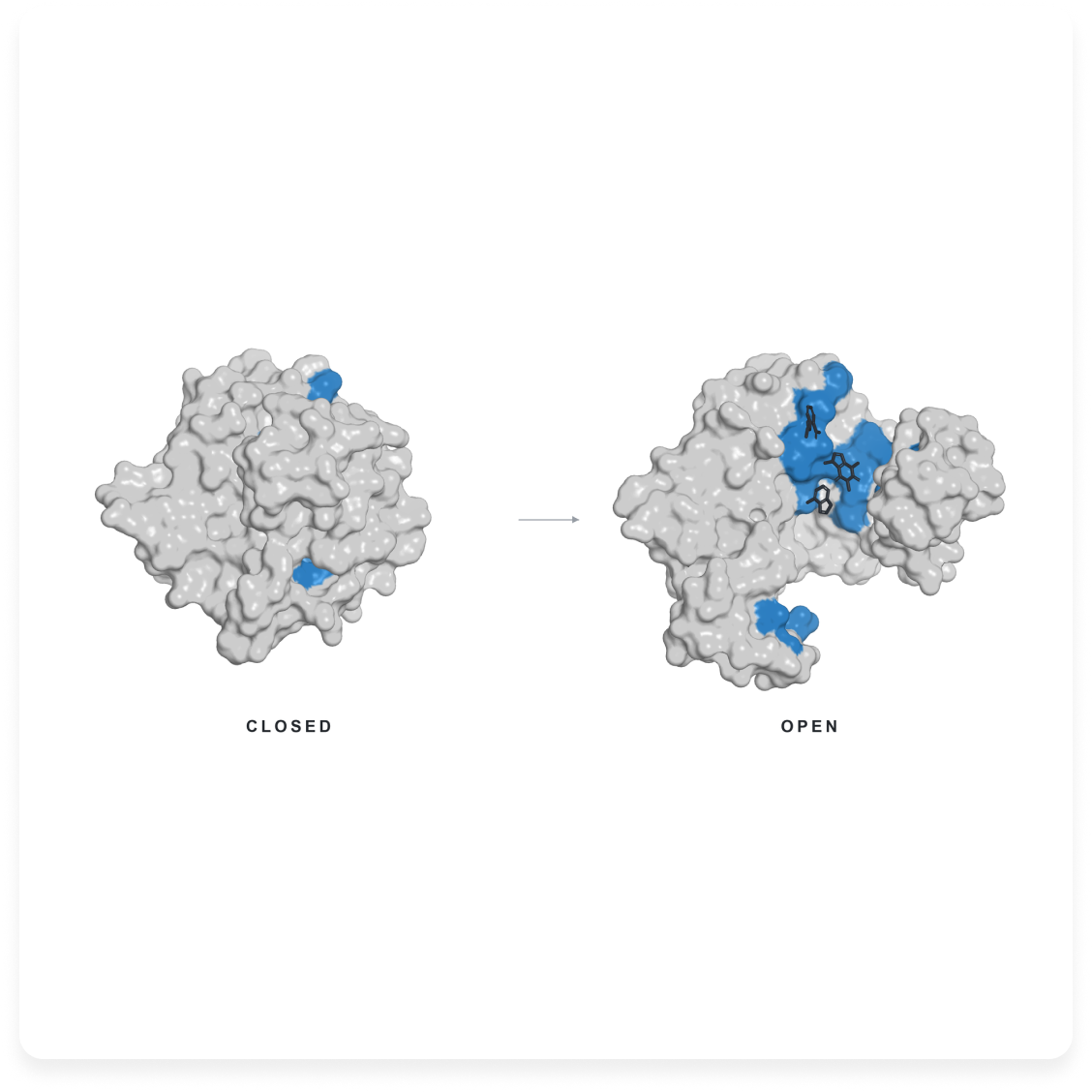
That distinction matters because a structure quietly defines part of the molecular search. If the calculation holds a pocket closed, it cannot evaluate interactions inside the cavity that appears when the pocket opens. If it fixes an uncertain side chain in place, the assumed position of one chemical group can influence the ranking of many candidates. An accurate overall fold can support either situation. What differs is the evidence for the particular geometry on which the design depends.
The change becoming visible in 2025–2026 is that more of these assumptions can be investigated within the computational workflow. Sampling, confidence assessment, experimental restraints and refinement all have longer histories. Their increasing reach around learned protein models creates a practical opportunity: the initial prediction can become a representation that improves with the project. Protein structure is becoming less of a static input and more of a representation that can be sampled, tested and updated as the molecular task demands.
Consider the closed pocket again. The immediate need is a credible alternative state in which the cavity is accessible. Molecular simulations have long explored such changes, but recent generative models make broad structural exploration more affordable. In 2025, a model demonstrated thousands of independent conformations per hour on one GPU, with tests covering hidden-pocket opening and domain rearrangements. Work published in August 2026 also showed that AlphaFold3’s generation process could be directed towards states, including ligand-associated conformations, rarely reached under default settings in the tested systems. Lewis et al., 2025; Ohnuki and Okazaki, 2026
This expands the structural possibilities available before a molecular search begins. An alternative supported for the target and conditions being studied lets the calculation explore interactions that the starting geometry excluded. Biased generation does not establish biological relevance, and generation frequency cannot simply be read as an equilibrium population. Independent conformations also provide no transition rates. Sampling supplies hypotheses to evaluate; its value depends on finding states that can legitimately inform the design.
Choosing among those hypotheses requires a more local view of accuracy. Imagine two protein domains, each modelled well, whose relative orientation is uncertain. A binder designed to contact both depends on that orientation. One confined to a supported surface within a single domain may be less affected. Similarly, a well-positioned backbone does not settle the orientation of every side chain around a proposed contact. Global fold accuracy, domain placement and contact geometry describe different structural assumptions.
Confidence estimates are becoming more useful for distinguishing them. In CASP16 assessments published across 2025–2026, methods using AlphaFold3-derived information, particularly confidence estimates for individual atoms, performed best at estimating local accuracy. Selecting good models from large prediction pools remained uneven, especially for complex assemblies. Fadini, Studer and Read, 2026 More detailed assessment can help identify which available geometry deserves consideration and where further evidence is needed. A confidence score still estimates aspects of model accuracy; it is neither a probability of successful binding nor proof that the model represents the relevant experimental state.
Consider how this might affect a choice between two molecules. One retains plausible contacts across several supported target states. The other has a better predicted score, but its advantage depends on a single uncertain side-chain position. That difference gives the project a concrete reason to investigate the contact before committing to the second molecule. The uncertainty belongs to a particular structural assumption, and the decision can take account of it alongside the molecular score.
The next step is to let that evidence influence the prediction itself. A sequence carries information about the structures a protein can adopt, but it does not fully specify the conditions under which a particular state matters. An experiment can supply some of that missing information. Its own context also matters: a well-resolved experimental structure may capture a state stabilised by a bound ligand or particular measurement conditions. Local precision and relevance to a new design task are separate properties. Work published in 2026 shows how pretrained protein models can serve as structural priors, the learned knowledge of plausible geometry, while measurements guide the formation of target-specific structural hypotheses.
This changes what can be extracted from incomplete observations. For the transporter SLC19A3, an AlphaFold2-based approach recovered a large conformational change using a cryo-electron microscopy map deliberately degraded to 10 Å resolution; higher-resolution information provided a separate check. In complementary work based on the AlphaFold3 architecture, guidance from nuclear magnetic resonance measurements generated ensembles with fewer distance-restraint violations than unguided predictions. The approach also incorporated X-ray and cryo-electron microscopy data. Fadini et al., 2026; Maddipatla et al., 2026
For design, the consequential result is access to geometry informed by the actual experimental system. A low-resolution map may distinguish domain arrangements while leaving atomic contacts largely dependent on the model’s prior. That is useful progress: the measurement can resolve the larger structural assumption without independently locating every atom. Performance remains dependent on the target and data quality; some large rearrangements resisted this guidance at low resolution. The resulting model needs to preserve that distinction between what the experiment constrains and what the predictor supplies.
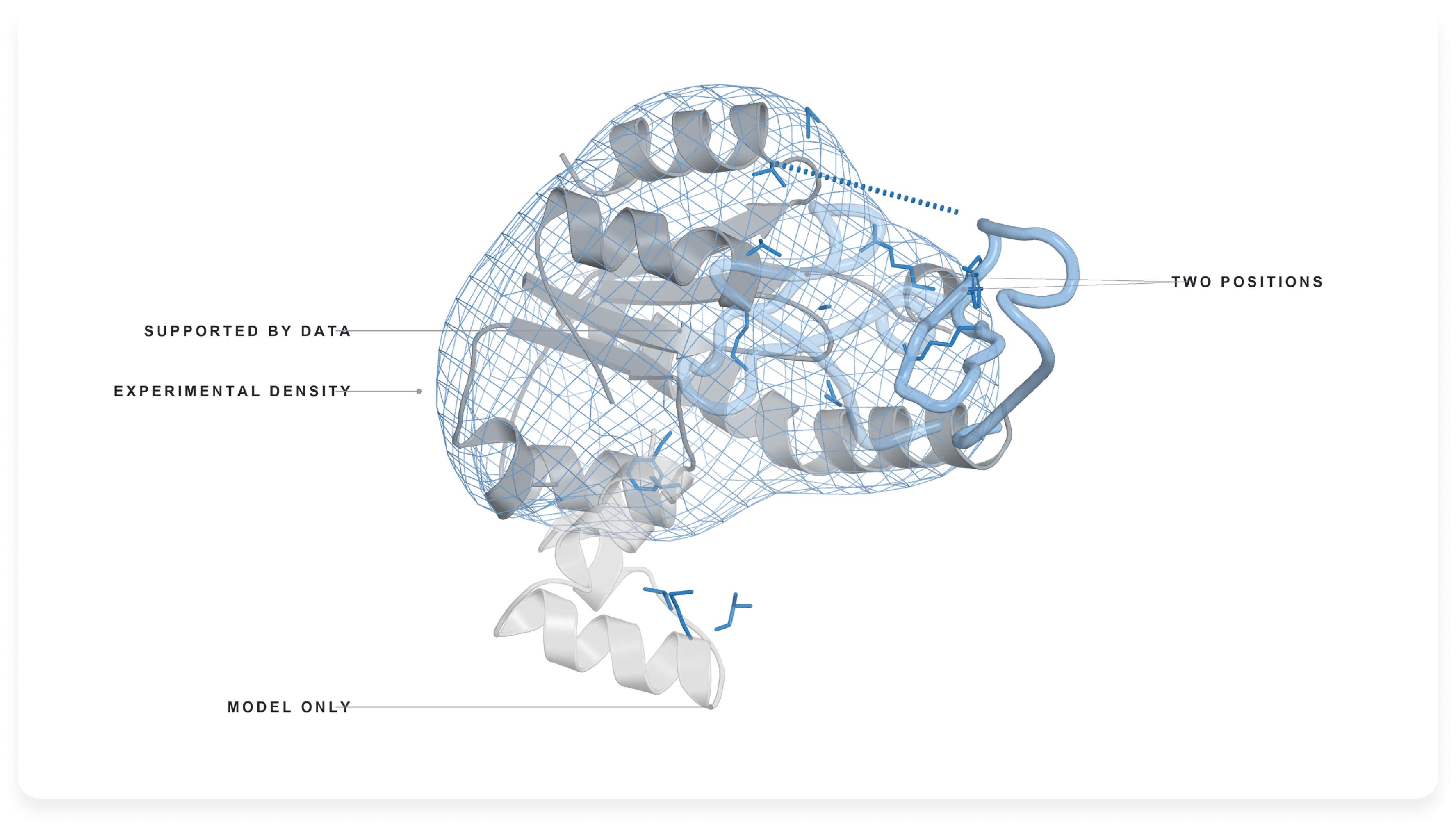
Agreement with measurements also has levels. Several ensembles can satisfy the same restraints, so fitting them does not establish a unique ensemble or calibrated equilibrium populations. Observations used to guide generation show compatibility with the fit; measurements withheld from that process test whether the interpretation extends beyond it. Such additional checks were included in the experiment-guided ensemble work. Maddipatla et al., 2026 These distinctions determine how much authority the resulting representation should have in a molecular decision.
Suppose two plausible target arrangements favour different candidate molecules. A measurement that distinguishes those arrangements could guide an updated prediction and change the preferred candidate. Other uncertain regions might remain unresolved without affecting that choice. This is how structural uncertainty becomes something a project can act on: the molecular calculation helps identify which additional evidence would be worth obtaining.
The task also supplies a demanding test of preparation. Refinement is often judged by a reduction in coordinate error, commonly measured by RMSD. That can establish structural improvement while leaving its practical value unanswered. Moving a remote loop closer to a reference may have little effect on ligand recognition. Reorienting a chemical group at the binding surface may alter a hydrogen bond or remove a clash while barely changing the whole-protein score. What matters is whether a supported structural change improves the intended calculation.
There is direct evidence for testing that connection. In virtual-screening benchmarks published in 2026, refinement combining structural uncertainty with molecular mechanics improved discrimination between binders and nonbinders compared with the starting AlphaFold2 models and models refined by molecular dynamics alone. Sen et al., 2026 The result concerns small-molecule screening in the reported systems. Its wider lesson is methodological: preparation should earn its place through the task it is intended to support.
For other ligand or binder design workflows, that means testing the relevant molecular ranking or experimental outcome rather than assuming that a gain transfers between applications. It also makes refinement selective. The prospective screening results above show that useful predictions need not always undergo extensive adjustment. Where preparation is warranted, both the structural evidence and the downstream calculation should help determine whether it has made the input better.
Together, these capabilities change what a target representation can carry into design. Coordinates define the proposed interactions. Local assessment identifies uncertain features. Alternative states expose choices hidden by a single geometry. Experimental constraints give those choices support specific to the target. Preparation and task-level evaluation then connect structural work to the molecular decision. These are complementary functions, increasingly available around learned models, although their integration is not yet a universally validated workflow.
The structural bottleneck is beginning to erode: projects have more ways to address weaknesses in an initial model before those weaknesses determine the outcome. Structural error remains consequential. The emerging advantage is the ability to recognise consequential uncertainty, investigate alternatives and improve the assumptions that matter. Over the next few years, wider validation and integration could make structural input less often the dominant constraint, with the pace varying across targets and applications.
For a structure-based design approach such as Xelari’s, this creates an opportunity to give molecular search a better-supported representation of its target. Readiness depends on the relevant state, the local geometry and an explicit account of uncertainty. A design-ready representation tells the calculation which features of the target it can trust, which it should vary, and where additional evidence can change the molecular choice.
References
- Jumper, J. et al. (2021). Highly accurate protein structure prediction with AlphaFold. Nature 596, 583–589.
- Lyu, J. et al. (2024). AlphaFold2 structures guide prospective ligand discovery. Science 384, eadn6354.
- Lewis, S. et al. (2025). Scalable emulation of protein equilibrium ensembles with generative deep learning. Science 389, eadv9817.
- Ohnuki, J. and Okazaki, K.-I. (2026). Enhanced Sampling of Protein Conformations in AlphaFold3 with Repulsive Bias in the Diffusion Generative Model. JACS Au. Published online 26 August 2026.
- Fadini, A., Studer, G. and Read, R. J. (2026). Model Quality Assessment for CASP16. Proteins: Structure, Function, and Bioinformatics 94, 302–313. First published online 22 August 2025.
- Fadini, A. et al. (2026). AlphaFold as a prior: experimental structure determination conditioned on a pretrained neural network. Nature Methods 23, 785–795. Published online 1 April 2026.
- Maddipatla, A. et al. (2026). Experiment-guided AlphaFold3 resolves measurement-consistent protein ensembles. Nature Biotechnology. Published online 29 June 2026.
- Sen, S. et al. (2026). Advancing In Silico Drug Design with Bayesian Refinement of AlphaFold Models. Journal of Chemical Theory and Computation. Published online 13 July 2026.
© 2026 Xelari Inc. All rights reserved.
