
Inside Xelari: The Technology Behind Structure-Based Aptamer Design
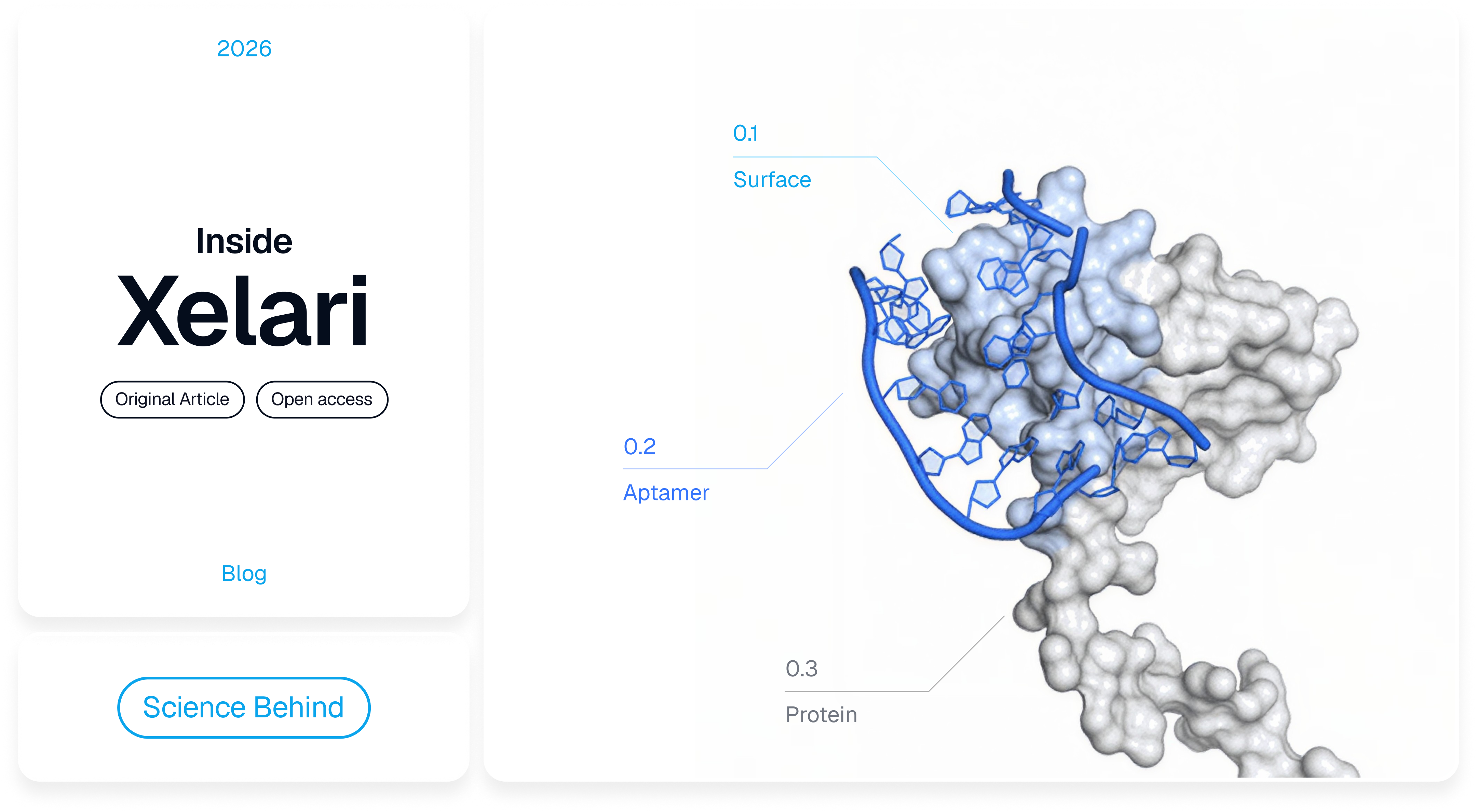
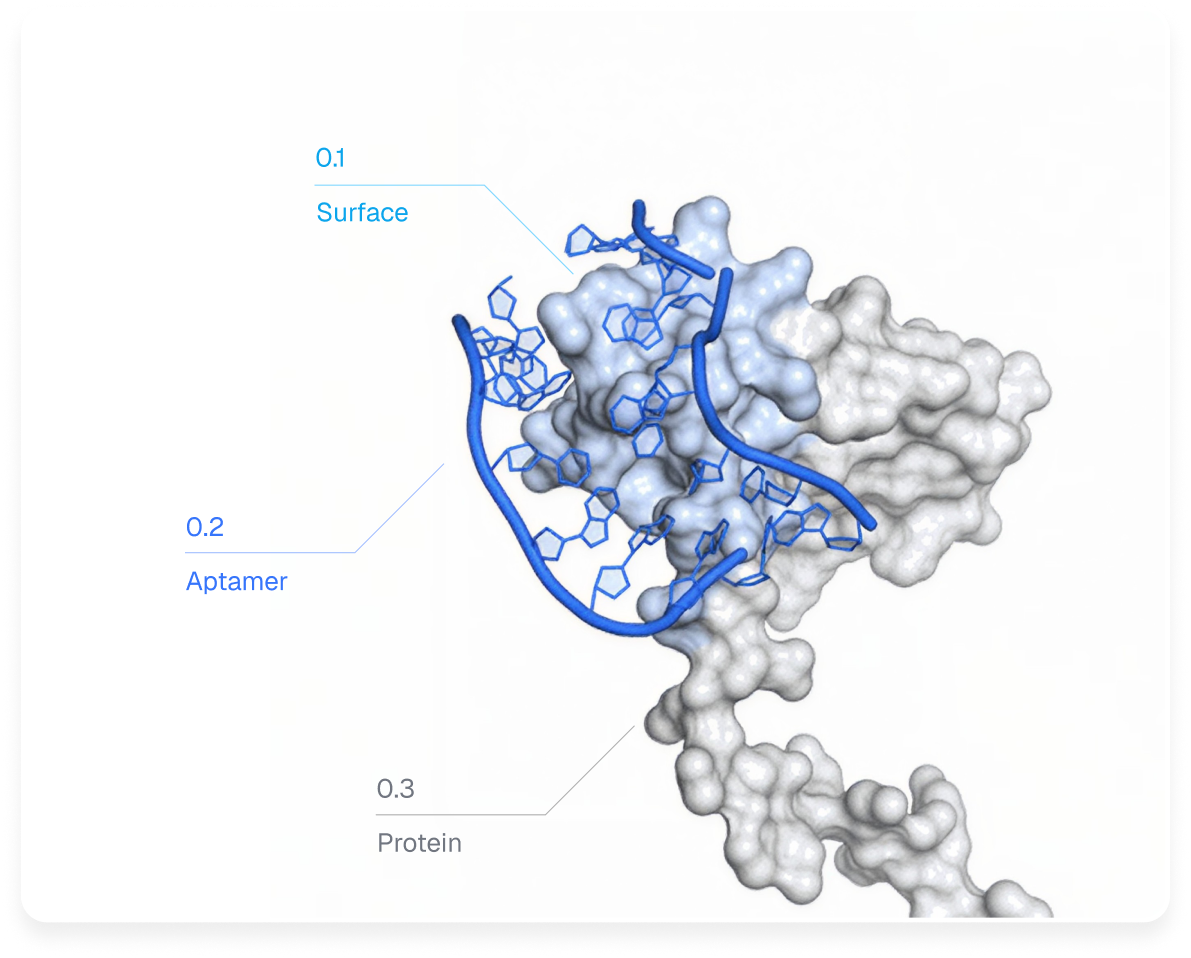
Aptamers are short DNA and RNA molecules capable of selectively binding to proteins through their three-dimensional structures. Traditionally, their discovery begins with experimental selection: researchers search through vast numbers of random sequences to find those with the desired properties. But when the atomic structure of a protein is known, another approach becomes possible – designing an aptamer based on how its nucleotides should interact with the target's surface.
In our new paper, Aptamers without SELEX: De novo design from protein structure in hours, published in Molecular Therapy – Nucleic Acids, we present our computational platform for designing DNA and RNA aptamers directly from the three-dimensional structure of a protein. It requires neither prior SELEX selection for a new target nor additional model training for a specific protein. In the implementation described in the paper, generating and ranking candidates takes approximately two to three hours of active computation on a single NVIDIA H200 GPU.
We hope this approach will help accelerate the development of new aptamers and broaden their applications in biomedical research, diagnostics, and drug development. Starting the design process directly from a protein structure could allow researchers to move more quickly to testing specific molecules, including against targets that are difficult to work with using traditional experimental selection methods.
Our technology combines molecular physics with machine learning. We use quantum chemical calculations to describe atomic contacts, analyze protein surfaces, build three-dimensional aptamer structures, and estimate their binding energy with the target.
In our study, we describe the scientific principles behind this technology in detail and evaluate its key computational components, from predicting atomic interactions to estimating binding energy.
Design based on molecular physics
One of the main challenges in computational aptamer development is the limited number of experimentally determined structures of DNA and RNA complexes with proteins. There are far fewer such structures available for training general-purpose models than, for example, structures of individual proteins. Moreover, many known complexes belong to closely related molecular systems, making it difficult to assess how well models can perform on new targets.
We adopted an approach that reduces dependence on this limited data: training neural networks not only on experimental structures but also on the results of physical calculations.
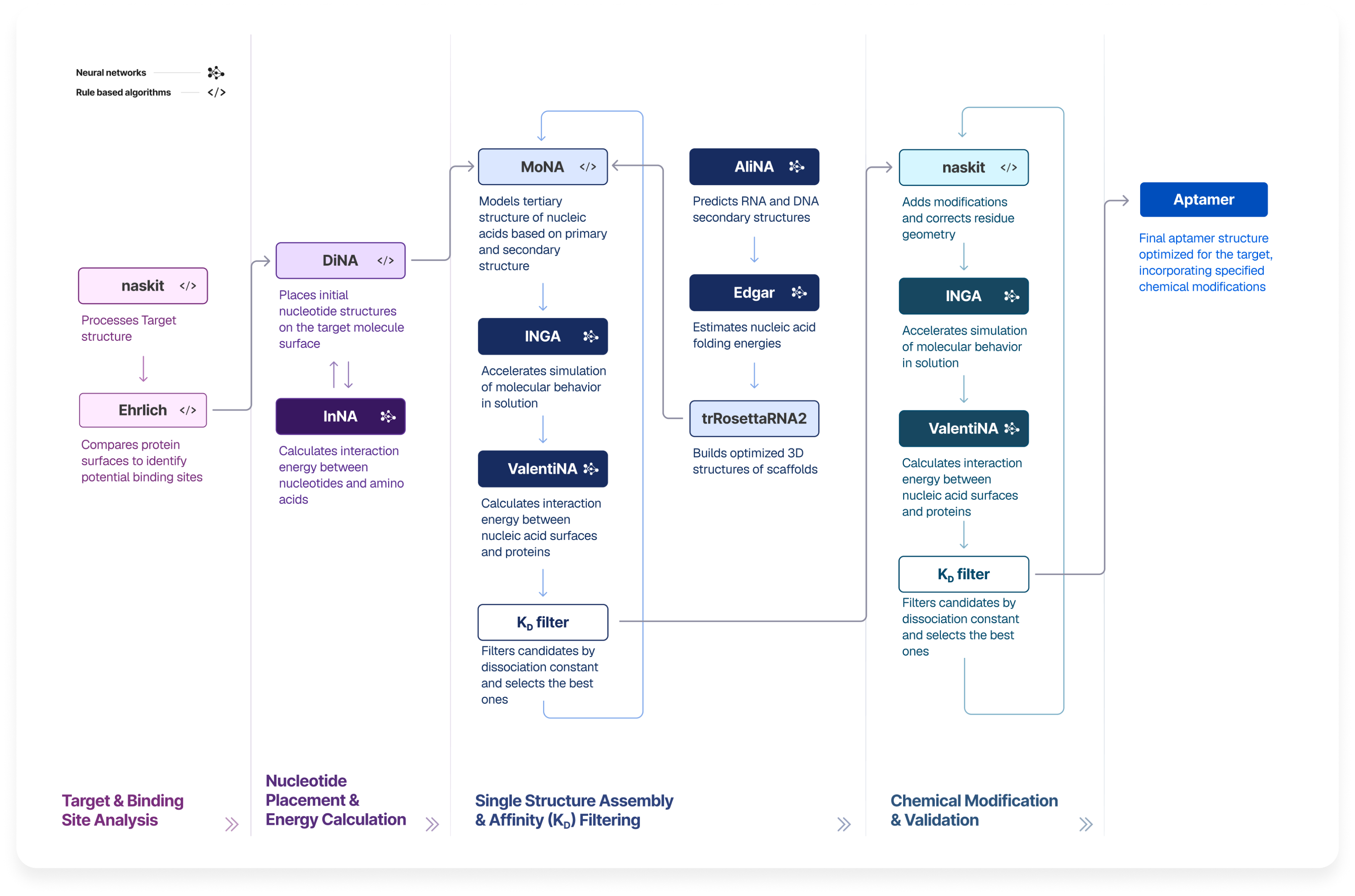
Architecture of the Xelari de novo aptamer design pipeline
For example, interactions between a nucleotide and an amino acid residue can be described using quantum chemistry. The energy of such a contact depends on the chemical composition of the molecular fragments and their relative positions. Even a small change in distance or base orientation can significantly affect the interaction.
However, direct quantum chemical calculations are too computationally expensive to evaluate millions of possible nucleotide placements during the design of each aptamer.
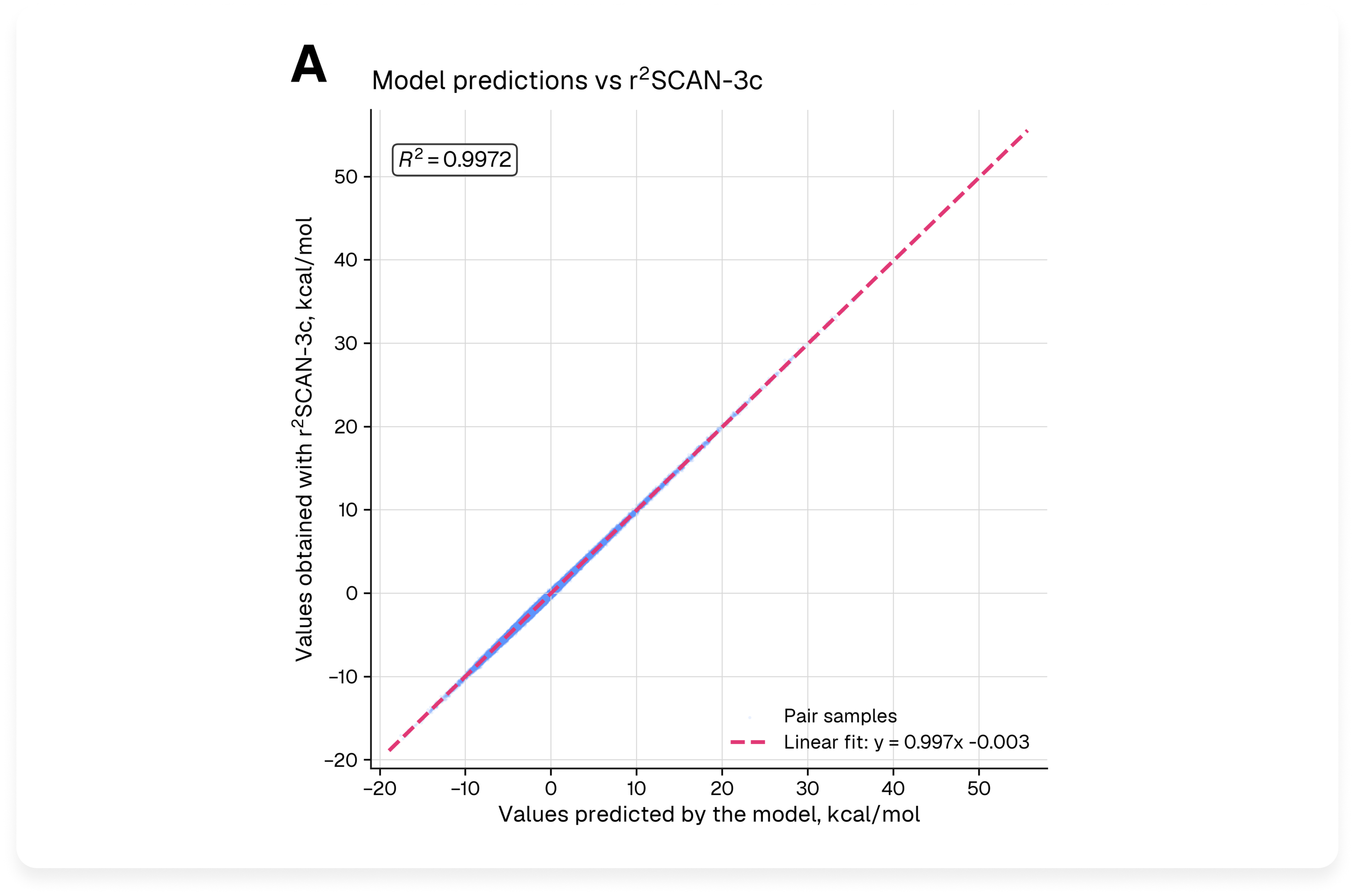
To address this, we developed InNA, a model trained on 13.09 million spatial configurations of nucleotide–amino acid residue pairs, with interaction energies calculated using the r2SCAN-3c method. On a test set of 483,735 configurations, InNA achieved a root mean square error of just 0.19 kcal/mol relative to the reference calculations. Comparable accuracy was maintained for two amino acid residue types that were not included in training.
This result concerns the energy of individual atomic contacts, not the affinity of a complete aptamer. These local interactions, however, guide the initial selection of nucleotides on the protein surface.
InNA predictions compared with r2SCAN-3c reference interaction energies.
We applied the same general principle to other computationally demanding tasks. As a result, a substantial part of the computational work is performed in advance, independently of any specific protein target.
From the protein surface to the aptamer structure
Designing an aptamer requires more than identifying which nucleotides interact most favorably with individual amino acids. We also need to find a region of the protein surface suitable for forming a binding interface and then position a nucleotide chain within it.
Strong interactions do not necessarily mean specific binding. For example, the negatively charged backbone of DNA and RNA can be attracted to positively charged surfaces on many different proteins.
Our platform therefore considers not only potential interaction energies but also the local geometry and amino acid composition of the protein surface. It compares surface regions with those of other proteins, identifies promising areas, and places short fragments of four to six nucleotides on them.
Two algorithms handle these tasks. Ehrlich analyzes similarities between protein surfaces, helping identify locally distinctive regions. DiNA searches for geometrically and electrostatically suitable regions for a nucleotide chain on the selected surface and uses InNA to select bases capable of forming favorable contacts with nearby amino acids.
In one of our key tests, we examined how accurately this approach identifies potential binding sites. We used 19 proteins represented by 38 experimentally determined aptamer–protein complexes. The algorithm received only the protein structure, without any information about the position of the bound aptamer.
For 17 of the 19 proteins, the predicted site was within 5 Å of the center of at least one experimentally known binding region. The median distance was 3.14 Å.
Surface and its regions.
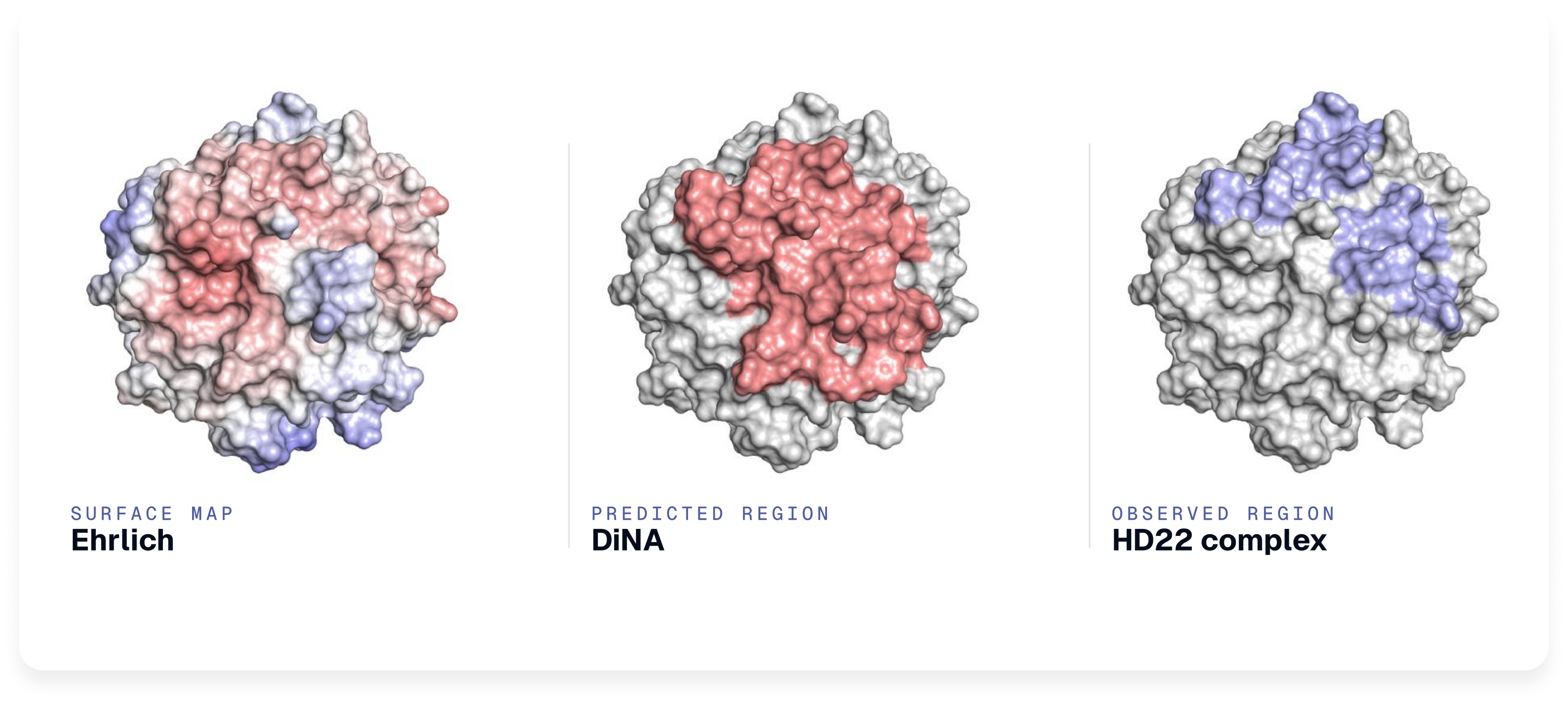
These results show that protein structure alone can provide enough information to identify potential nucleic acid binding interfaces before constructing the full aptamer sequence.
But positioning a short fragment on the protein surface is only part of the challenge.
An aptamer must form its own three-dimensional structure while keeping the necessary bases accessible for interaction with the target. Nucleotides within the chain pair with one another, forming stems and loops, and these interactions can substantially change the position of the binding region.
We therefore developed a method for incorporating the identified fragments into precomputed three-dimensional DNA and RNA scaffolds. Our library contains approximately 23,000 structures, ranging from 15 to 45 nucleotides in length and representing different base-pairing patterns. During assembly, the system checks whether the fragment is geometrically compatible with the scaffold and whether the required secondary structure can be preserved.
If inserting the binding fragment disrupts base pairing, the MoNA algorithm can introduce compensatory changes elsewhere in the sequence while preserving the nucleotides needed for protein binding. The resulting structure is evaluated using AliNA, a model trained in part on experimental RNA chemical probing data supplemented with structural and evolutionary information.
Evaluating stability and affinity
Even the correct geometry of molecular contacts does not guarantee stable binding.
In solution, DNA and RNA can adopt multiple conformations. Complex formation depends not only on individual interactions with the protein but also on the free energy of aptamer folding, structural changes upon binding, and interactions with the surrounding environment.
Our platform therefore treats the stability of the aptamer's own structure and its affinity for the protein as separate computational tasks.
For comparative evaluation of folding stability, we use Edgar, a model trained on molecular dynamics calculations. It is used to compare candidates according to their predicted stability, without treating its outputs as direct thermodynamic measurements.
The interaction energy of the complete complex is evaluated by ValentiNA. The model takes into account the aptamer sequence, its secondary structure, and calculated contacts with the protein. In a retrospective evaluation involving 32 experimental affinity records, the Spearman rank correlation between calibrated predictions and experimentally measured binding energies was 0.795. This supports the use of the model for ranking candidates.
Another capability of our platform is the incorporation of chemical modifications during design. Changes to nucleotide bases, sugar groups, or the backbone can improve an aptamer's resistance to degradation, but they can also affect its structure and affinity.
We evaluated ValentiNA's ability to account for these effects using published experimental series of chemically modified aptamers. In several of these series, the model correctly reproduced the experimentally observed affinity ranking.
ValentiNA binding energies versus experimental references.
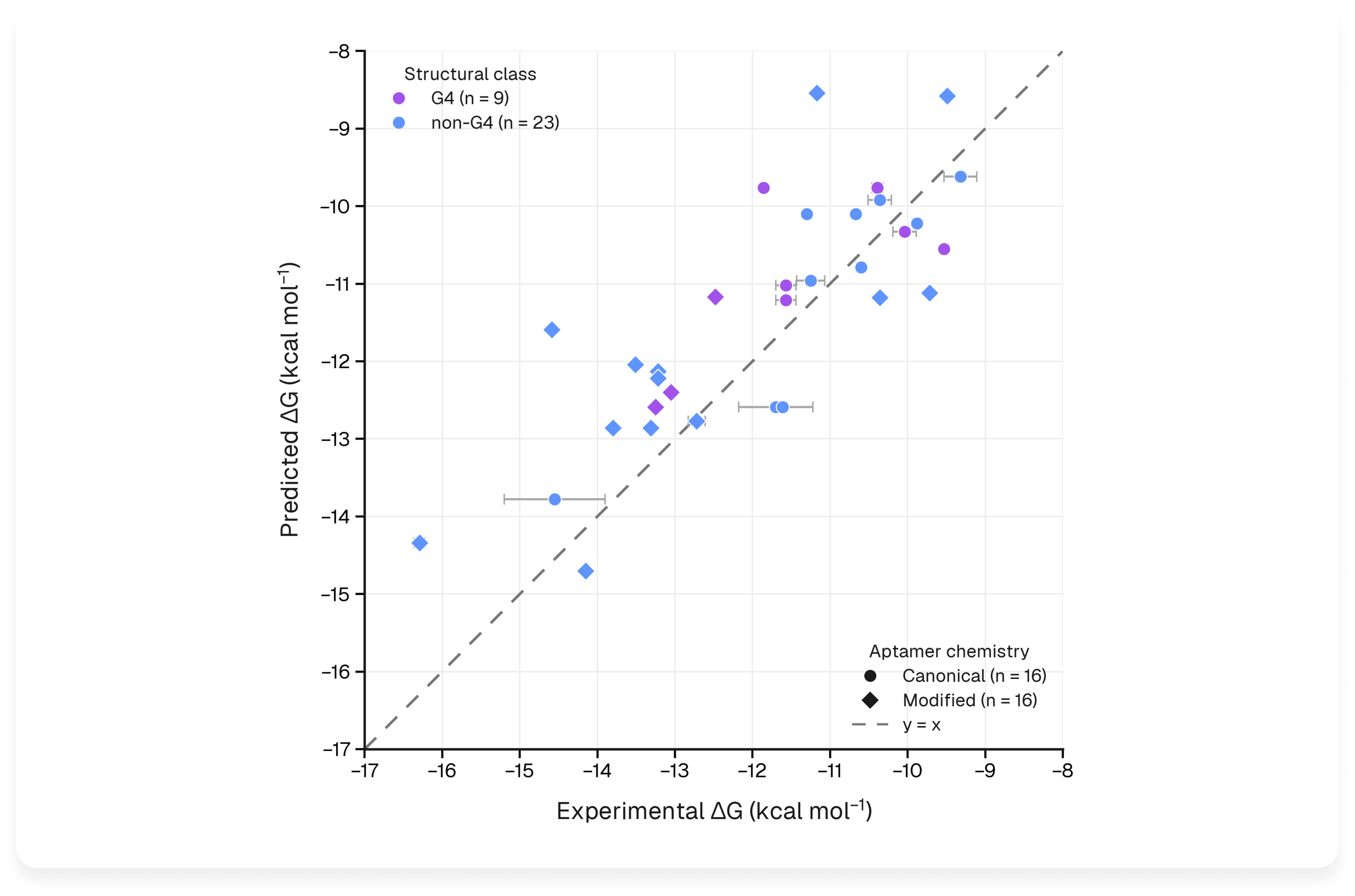
This makes it possible to consider chemical modifications as part of molecular design rather than only as a later optimization step. We hope that further development of these methods will allow more precise control not only over an aptamer's affinity for its target but also over its structural stability and chemical properties.
From protein structure to testable candidates
We have combined these methods into an automated computational workflow. The input is an experimentally determined or predicted protein structure. Users can also specify a binding region, aptamer length, supported chemical modifications, and certain environmental conditions.
The result is a ranked set of DNA or RNA sequences, their predicted secondary structures, and three-dimensional models of their complexes with the target protein.
This information allows researchers to examine the predicted contacts between an aptamer and its target, assess the contributions of individual sequence regions, and propose modifications for subsequent experimental testing. Instead of a sequence with an unknown binding mechanism, researchers obtain a specific structural hypothesis.
Computational design does not eliminate the need for synthesis and laboratory measurements. The quality of the input protein structure, the accuracy of folding predictions, and the estimation of complex binding energy all affect the outcome. Further experimental studies will be needed to determine how often our approach produces functional aptamers against new targets.
At the same time, we see considerable potential for further development of this approach.
Today, aptamer discovery still relies heavily on experimental selection and subsequent optimization of the identified sequences. We hope that advances in computational methods will gradually allow part of this work to move to the rational design stage.
In the long term, this could shorten the time between selecting a biological target and obtaining a functional aptamer, reduce dependence on large-scale experimental selection campaigns, and make it easier to work with proteins for which traditional selection methods are difficult to apply.
We expect these technologies to contribute to the broader use of aptamers in molecular diagnostics, biotechnology, fundamental research, and drug development.
Our new publication establishes the scientific foundation for this direction. It shows how knowledge of protein structures and the physics of molecular interactions can be combined into a computational process that produces specific aptamer sequences and models of their complexes with target proteins within hours.
We plan to continue developing methods for evaluating molecular interactions and expanding the possibilities for targeted sequence optimization. Our goal is to make aptamer development more predictable and controllable, so that the search for new binding molecules increasingly relies not only on experimental selection but also on rational design informed by an understanding of how these molecules work at the molecular level.
Scientific publication
Dolgusheva V., Leibin I., Kudryashova N., et al.
Aptamers without SELEX: De novo design from protein structure in hours.
Molecular Therapy – Nucleic Acids, 2026; 37.
https://doi.org/10.1016/j.omtn.2026.103133
© 2026 Xelari Inc. All rights reserved.
